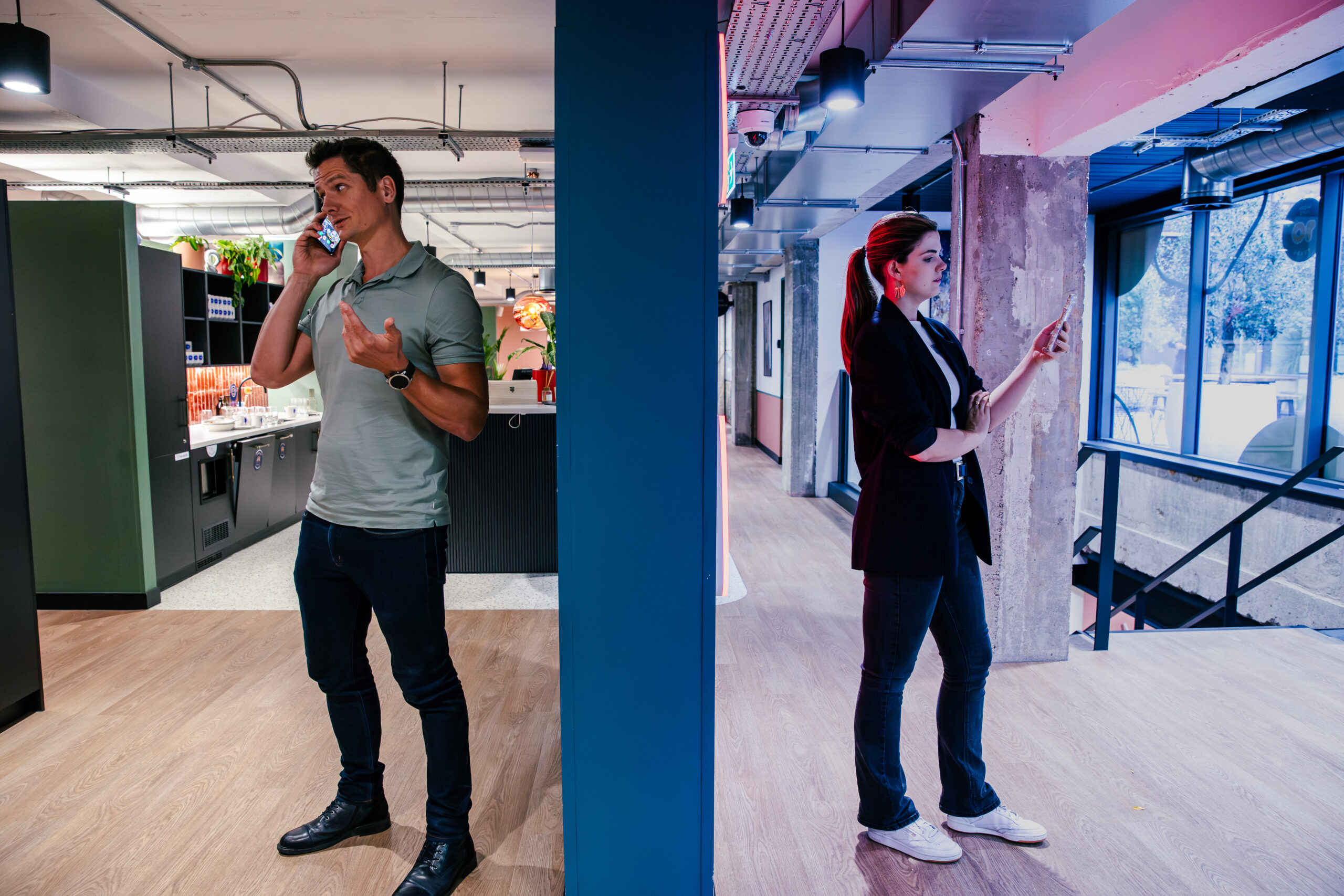
Where's The Office Buzz Gone? The Polychronic Pivot
In today’s multi-threaded world, we must recognize that the "buzz" that used to exist in offices worldwide was a byproduct of a specific time-management system that no longer takes precedence — one that was fundamentally monochronic and which technology has dismantled.
Being a leader today means re-interpreting the way you look at time itself to keep up with changing employee values.
How Has the Way We Perceive Time Itself Changed?
For over a century, Western business was monochronic: linear, sequential, and desk-bound. Work happened one task at a time, in a specific place, at a specific hour. Today, technology — always-on, and supportive of flexible, hybrid work — has forced a shift to polychronic time: multi-threaded, fluid, and integrated into a 24/7 reality.
Your employees’ brains have been remapped by the very tools you gave them to enhance productivity. Forcing a polychronic worker back into a 9-to-5 monochronic box doesn't just feel annoying; it feels inefficient. As a society, we didn't just change where we work; we also changed how we perceive time.
How to Bring Buzz Back to Your Office in 2026
Running polychronic people on monochronic restraints leads to disconnection. If a worker commutes only to sit on Zoom calls in a library-silent environment, the office feels hollow. To move forward, leaders must stop treating the office as a factory and start treating it as a destination for interaction.
Office Rituals for Intentionally Creating Buzz
- Zone off dead space: Close off 80% of the floor to encourage proximity and increase opportunities for spontaneous interaction.
- An office soundtrack: Use curated playlists at a low volume to break the "library silence."
- Communal lunch: Move lunch from the desk to a shared table for team building and informal knowledge sharing.
- Morning pulse: A standing huddle focused on immediate needs, not status updates. Questions might include: “Who’s in today?”, “What should we talk about?” and “What are you working on?”
- "Show and tell" over coffee: Quick sessions where team members share the "messy middle" of a project over a coffee.
- Shared focus blocks: 90-minute windows where a team performs deep work in the same space.
- Intentional connection: One non-work conversation with someone outside your immediate department.
- A leaving ritual: A 2-minute wrap-up to celebrate a win that only happened because of co-location. Before leaving, walk around and say goodbye to colleagues. Ask, “Before I go, is there anything I can help you with?”

How to Differentiate Working From Home to Working in the Office
If the office is for energetic density, home is for cognitive flow. As a leader, your attitude toward home working dictates whether it contributes to or hinders productivity.
Below are three key aspects of work that can be challenging to replicate when working from home, and how these challenges often lead to either a micromanagement or a trust-based leadership approach.
- Monitoring
Micromanagement: Obsessing over green "status lights."
Trusting: Focusing on outcomes and "definition of done." - Communication
Micromanagement: The digital tap on the shoulder, constant pings of “are you there?”.
Trusting: Protecting deep work blocks and asynchronous updates. - Flexibility
Micromanagement: Subconscious digs about informal attire.
Trusting: Celebrating life-integration (gym, school runs etc).
How Do You Maintain Connection Without Physical Oversight?
To maintain connection and intensity without physical oversight, organizations require robust digital scaffolding. This is the structural replacement for the office walls.
- Shared dashboards: These provide a single source of truth. A real-time dashboard replaces the "buzz" by making KPIs, priorities, and project health visible to everyone, keeping employees tethered to the mission. Shared dashboards, workflows, and planning boards become active drivers of culture.
- Messaging hubs (Slack/Teams): These serve as the organization’s central nervous system. By working out loud in public channels rather than private DMs, culture is documented, knowledge is shared, and momentum becomes visible.
- A focus on results and quality: In a polychronic environment, there is nowhere to hide. Intensity is fuelled by ownership rather than oversight. High-intensity cycles depend on clear expectations, meaningful autonomy, and ruthless accountability for quality.
The past relied on being in the same place at the same time. The future relies on being aligned to the same purpose while operating across different times, locations, and work patterns.
We can no longer rely on a building to build our culture for us; we must architect it through clarity, intentionality, and courage.

You might also like
4 Tips for Talking to Your Team About AI Anxiety

How to use AI to Create a Seamless Learning Experience

How to Motivate Your Salespeople

Leveraging Cognitive Biases to Boost Sales
Why Soft Skills Trainings Help Keep Clients Coming Back