
A Glance Into The Future Of AI: Our EdTech Developers
As AI continues to reshape the digital landscape, our Web team offer their opinion on what comes next. From bold optimism about a century of acceleration to cautious reflection on hype and human value, this piece explores where AI may take us — and what remains uniquely ours.
Anite, EdTech Developer:
When The Internet Felt Like Magic: A Sense of Deja Vu
We still remember when the internet felt like magic — emails replacing letters and online markets reshaping the success of physical businesses overnight. That was the dot-com era: messy, chaotic, and truly world-changing. The expansion of AI feels similar; except this time, it's not about connecting people. It's about how we work, how we think, and how we build.
I still remember the moment (and impact) when ChatGPT launched. I was immediately mind-blown. As I typed into what looked like a familiar chat interface — like something reminiscent of the 2010s but with a modern twist — it generated responses that were not pre-set, but fully formed sentences created in real time.
As someone who was studying the intricate details and foundations of artificial intelligence at the time, I felt something I had never experienced before… a feeling I still struggle to describe to this day. In that moment, I understood the potential of this technology and how quickly it could shape the world.
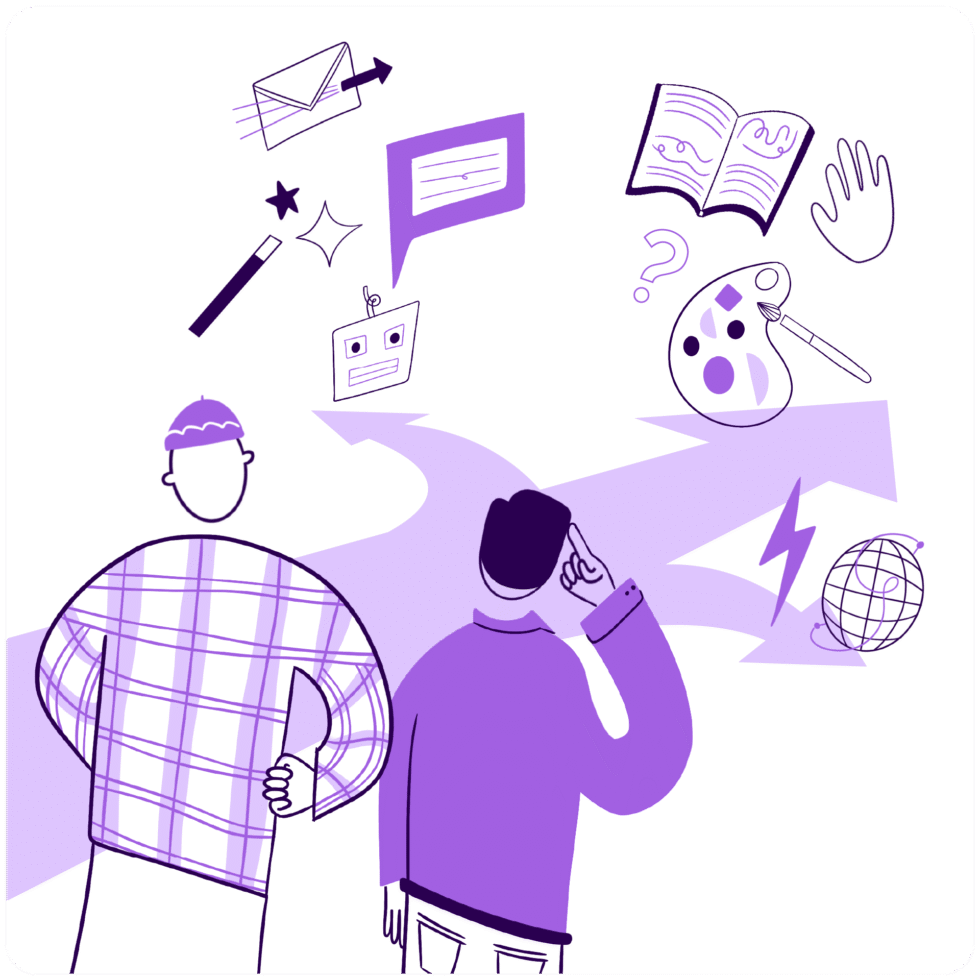
Will AI take our jobs?
We are living in a moment in time where AI is drastically improving every single day, and as customers, we have little control over its momentum. This rapid progress is causing insecurity. People are anxious about the future of AI , wondering whether it will take their job. Though I partially agree, I don't believe we’re there yet.
At the start of the ChatGPT boom, many people didn’t trust how well it could produce content, write emails, or generate code. In some workplaces, it was barely a word you could mention. But have you noticed how recently organizations have started encouraging the use of AI tools? And have you asked yourself why?
For the first time in history, organizations can dramatically reduce project turnaround times while aiming for greater profits. They know that investing in artificial intelligence allows them to become far more productive — and if they fail to board the AI train, they risk being left behind.
So, when will this end? The short answer, it won't.
This is only the beginning. If we look 100 years into the future, I believe that most jobs — and even many everyday tasks — will be heavily supported by AI.
Every industry, from major technology companies to the film industry, will rely on AI if they don’t already. There will be autonomous vehicles requiring no drivers, studios using AI to create entire worlds, and profession-specific AI agents operating 24/7 in synchrony to run companies.
Anyone will be able to produce an industry-level product. The differentiating factor, however, will remain human creativity. There will be so much AI-generated content that standing out will depend on the ability to think outside of the box.
The future of AI: How to secure your place
Yes, it is a daunting future. But then you ask yourself, what can I do? How can I "secure" my future? The only honest answer is learning how to adapt.
Whenever a world-changing technology has emerged, a lot of professions and roles have disappeared — but new, previously unimagined ones have also been created. The real question is, are you adapting in your workplace, or are you staying behind?
Ross, Associate Director | IT:
The Rapid Rise of AI
I can’t read any think pieces written before 2022 without cringing. This includes my own.
Back when GPT sounded like something you’d find at the gym, I wrote an article for our website with the bold assertion that we “all needed to calm down a bit” about AI.
Four years on, my washer-dryer boldly offers a cycle powered by AI. TikTok’s parent company, ByteDance, has released a model capable of generating complete Marvel movies. And many people are reporting that their over-reliance on Large Language Models (LLMs) for complex tasks has manifested in an undesirable effect known as “de-skilling”.
Foretelling the results of one hundred more years of AI development tempts further ridicule on the part of the author, but if Arthur C Clarke was able to describe the music generation app Suno in his 1957 short story The Ultimate Melody, predicting a machine that trains on “hundreds of the really famous tunes in classical and popular music”, then why shouldn’t I have a go?
Are we facing a bland future ahead?
Let’s start with the most pessimistic approach. AI will likely continue to redistribute the wealth of artistic creation from individual artists into the hands of tech giants. The tide of “slop” and disinformation will only continue to rise, making trust a rare and valuable currency. Wild prose will become homogenized (or as Gemini puts it, “Refined”).
We’re heading towards a bland future.
However, it’s not all gloom. In our own industry of L&D, while experience will become irrelevant in hiring, it will be superseded by the ability to empathize and connect.
This is where I am a little more optimistic. Nothing can replace shared human experience. It’s a biological need. As much as the relentless accelerationists promise absolute tech integration, the novelty will wear off, and people will sense the shallowness of it all.
With that in mind, in one hundred years’ time, people will still be connecting with people.
Unless, of course, we’ve all been replaced by robots.
Liked this? Read our full magazine issue on AI and what it means for L&D.

You might also like

Where's The Office Buzz Gone? The Polychronic Pivot

4 Tips for Talking to Your Team About AI Anxiety
How to use AI to Create a Seamless Learning Experience

How to Motivate Your Salespeople

Leveraging Cognitive Biases to Boost Sales